
物理AI感知基础设施
目录
摘要#
- 核心主题:作者把 Physical AI 拆到第 3 层“感知(Perception)”,认为这是最直接、最容易被市场理解、也最具可投资性的层。物理系统如果不能理解周围环境,就只是硬件;感知层把摄像头、Lidar、雷达、边缘芯片和软件采集到的信号,转化为机器可用的判断。
- 投资框架:作者强调价值不在最便宜的单一传感器,而在更易部署、更准确、更集成、更贴近客户工作流的系统。理想公司应同时具备真实部署、软件附加、边缘处理、客户流程集成,以及 AI 正在改善产品的证据。
- 重点公司:Ambarella $AMBA 是边缘 AI 视觉 SoC,位于摄像头和传感器之后,承担本地推理和视觉处理;Cognex $CGNX 是成熟机器视觉公司,工厂和仓库已经为检测、读码、测量和自动化付费;Ouster $OUST 提供 Lidar、原生彩色 3D 感知、摄像头、软件和智能基础设施,是更纯粹的 3D 感知暴露;Ceva $CEVA 也符合筛选,但作者会放到第 4 层。
- 关键信号:Ambarella 有超过 15 个机器人设计导入,生命周期收入超过 1 亿美元,并与 Hanwha 签订潜在收入超过 8 亿美元、跨度超过 10 年的长期协议。Cognex 最新季度调整后 EPS 翻倍以上、调整后毛利率 71.8%,并推出 In-Sight 6900 与 3900 两款嵌入式 AI 视觉系统;物流业务连续 9 个季度双位数增长,SLX 组合把读码扩展为仓库感知。
- 风险与观察点:硬件周期、设计导入转化速度、AI 视觉产品采用率、估值和竞争格局都需要验证。本文对 Ouster 的详细分析被引导到外部完整报告,当前 X Article 更像是作者感知层框架和前三家公司导论。
中文译文#
物理AI:需要感知能力#
这是我一直非常兴奋、想要研究的时刻。
也是最让人期待的一层。
第 3 层:感知。
我们在 Physical AI 主题上正在取得很大进展。
如果你还没读前两层,可以先看这里:
Physical AI:第 1 层
Physical AI:第 2 层
我也已经建立了几个仓位。你可以在这里看到:
Physical AI 投资组合
但今天,我要介绍第 3 层:感知。
我说这是大家一直在等待的时刻,是因为它是 X 上讨论最多的一层。不管人们是否真正理解它。
像 Ambarella $AMBA 这样的公司,
或者 Ouster $OUST。
自动驾驶、Lidar、芯片、传感,等等。
这就是 Physical AI 故事真正开始让人理解的地方。第 1 层和第 2 层可能会显得更抽象,也没那么直接。
第 3 层非常直接。
我还认为这是最具可投资性的层之一,而且这一层里的仓位权重会比之前几层更高。
当我们谈论感知时,我们谈的是已经部署出去的系统需要理解它们所处的环境。
它前面有什么?那个物体有多远?机器在移动吗?安全吗?等等。
如果一个已经部署的系统,无论是汽车、机器人、无人机还是别的什么,不能理解自己的物理环境,那它就只是一块硬件。它缺少“智能”的部分。
所以,它们需要感知。
而好处在于,这已经被广泛使用了。
工厂已经在机器视觉上花钱。仓库已经在使用摄像头、扫描器和检测系统。汽车已经搭载 ADAS(高级驾驶辅助系统)芯片和感知软件。
我们知道,这已经是现实,而且很重要。
所以,这份报告的目标是弄清楚:哪一种感知暴露值得持有,以及介绍我认为定位最好的公司。
感知做什么#
感知是把物理世界转化为机器可用信息的那一层。这听起来也许相当直观,但它是 Physical AI 最难的部分之一,因为真实世界混乱、不一致,而且一直在变化。
我们面对的是:
- 光照不断变化。
- 物体总是在移动。
- 表面会反射光线和阳光。
- 包裹会因为接触、潮湿、产品本身而损坏。
- 道路会被雨、雪、灰尘和眩光覆盖。
- 工厂零件会以奇怪的角度到达。
- 等等。
Physical AI 系统必须先理解这一切,才能做任何有用的事情。
这就是这一层的关键区别。系统不只是捕获数据。它必须把原始信号转化为理解。
摄像头可以给系统视觉信息,Lidar 可以给它深度和结构,雷达可以帮助处理运动、距离和低可见度。边缘芯片可以在本地处理这些信息。软件可以把输入变成机器真正可以使用的东西。
价值不只是输入本身,而在于系统能从中推断出什么。
- 这是什么物体?
- 它在哪里?
- 它有多远?它在移动吗?
- 它损坏了吗?安全吗?
- 它在应该出现的位置吗?
- 有什么东西发生了变化吗?
- 系统需要采取行动吗?
这些都是感知。
这也是为什么这一层最好的机会,通常不是那些销售最便宜独立传感器的公司。随着时间推移,我认为更多价值应该流向那些让感知更容易部署、更准确、更集成、对客户更有用的公司。这会以不同方式体现出来。
它可以是本地处理摄像头数据的视觉芯片。也可以是帮助工厂检测产品的机器视觉系统。它可以是从条码读取扩展到更广泛仓库视觉的能力。它可以是加入更丰富 3D 理解能力的 Lidar。它也可以是把原始传感器数据转化为决策、警报、分析或自动化的软件。
这就是我在这份报告里使用的视角。
我在寻找能够覆盖更多感知问题的公司。最好的配置应该具备以下要素中的某种组合:真实部署、软件附加、边缘处理、客户工作流集成,以及 AI 正在让产品变得更好的证据。
这一层有些不同#
第 1 层和第 2 层有点……抽象?我不知道这是不是准确的说法。但对很多公司来说,你确实需要深入挖掘,努力寻找 Physical AI 角度;而且对许多公司来说,这更多是未来可选项。
但在这里,它极其直接。
我前面提到的所有东西,比如机器视觉、汽车 ADAS、边缘 AI 视觉芯片等等,都已经在出货。Lidar 和 3D 感知也已经部署。
这是一个现在就非常可投资、并且直接暴露于 Physical AI 的层。
我关注的公司#
有很多公司都能参与这一层。
和所有这些层一样,许多公司也可以同时放进多个层。所以我只是基于自己的理解,尝试为每家公司找到最合适的位置。
因此,第 3 层让我想到 Ambarella、Cognex 和 Ouster。
Ambarella $AMBA 已经在我的投资组合里,因为我是在开始覆盖 Physical AI 主题之前就投资了它。它提供位于摄像头和传感器正后方的边缘 AI 视觉计算锚点。AMBA 也很容易被放进第 4 层。
Cognex $CGNX 是一家成熟的机器视觉公司,工厂和仓库已经在为感知付费。
Ouster $OUST 提供非常纯粹的传感和 3D 感知暴露,覆盖 Lidar、摄像头、软件和智能基础设施。
Ceva $CEVA 会放到第 4 层,但它在这一层筛选中也出现了。
让我进一步介绍一下这些公司。
这份报告仅用于教育和信息目的。它反映的是我的个人研究过程、观点,以及对公开信息的解读。本文任何内容都不应被视为个性化投资建议、财务建议、税务建议、法律建议,也不构成买入、卖出、持有或做空任何证券的建议。
Ambarella#
如我所说,这已经是 Physical AI 投资组合中的 6% 仓位。我可能会随着时间推移决定增持。
我已经在这里写过一份完整报告:
I Took A New Position - EDGE AI
还有一份财报复盘:
AMBA Earnings: The Edge AI Thesis Got More Real
所以这里我不会做大篇幅深挖,只做一个 TLDR。
它们销售低功耗视觉 AI SoC,被用于摄像头、无人机、车辆、机器人、安防系统和工业设备。这些芯片在本地处理视觉数据、运行 AI 推理,并帮助设备输出有用结果,而不是传输原始视频。
这让 AMBA 成为感知和边缘计算之间的桥梁。
传感器捕获世界,而 Ambarella 帮助系统处理传感器捕获到的内容。
这个区别很重要,因为 Physical AI 不能依赖把每一个决策都发到云端。无人机、车辆、仓库机器人、工厂摄像头或安防系统都需要快速的本地智能。延迟、带宽、功耗、隐私和可靠性都会推动更多推理转向边缘。
最新财报电话会支持了 Physical AI 关联。
管理层表示,AI 推理正在向边缘侧,以及网络中的 Physical AI 层迁移。他们还表示,Ambarella 的 SoC 把感知、传感器融合、AI 加速、CPU、视频编码和其他系统功能集成到一颗芯片中。
Ambarella 现在拥有超过 15 个机器人设计导入,包括空中无人机,生命周期收入超过 1 亿美元。它们的机器人管线中也有超过 30 个客户。管理层特别讨论了空中无人机、工业自动化、自主移动机器人、配送机器人、仓库机器人,以及一些类人形应用。
这正是我非常希望看到的证据类型。机器人开始以有意义的方式出现在设计导入漏斗里。
Hanwha 协议也实质性增强了这个设置。Ambarella 宣布了一项长期协议,潜在收入超过 8 亿美元,跨度超过 10 年。这段关系始于实体安防,但管理层把更广泛的机会描述为运营自动化、生命科学、机器人和工业市场。
如果按预期放量,这种长期协议可以随着时间推移让业务变得更可预测。
Cognex#
Cognex 帮助工厂和仓库检测产品、读取代码、测量物体、引导自动化系统,并改善物理工作流。使用场景实际、可衡量,而且已经商业化。
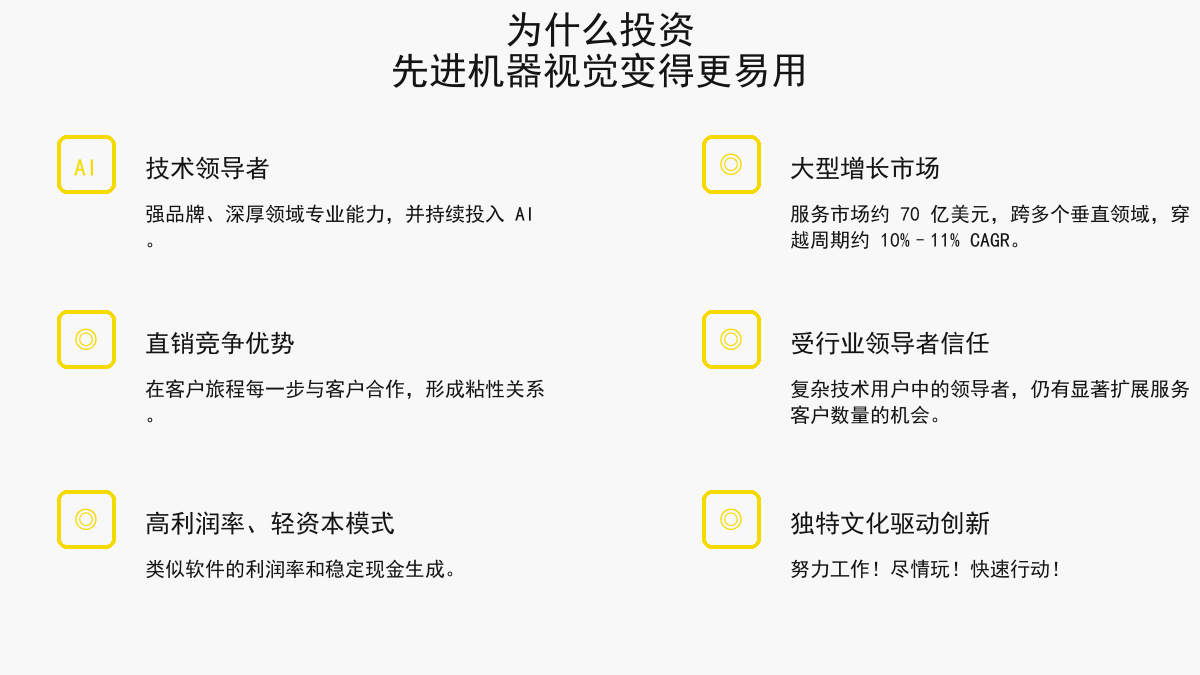
它们销售视觉系统、智能摄像头、条码读取器、3D 视觉系统、深度学习工具和工业检测软件。客户购买的是更好的质量控制、更高吞吐量、更少错误和更多自动化。
最近一个季度非常出色。
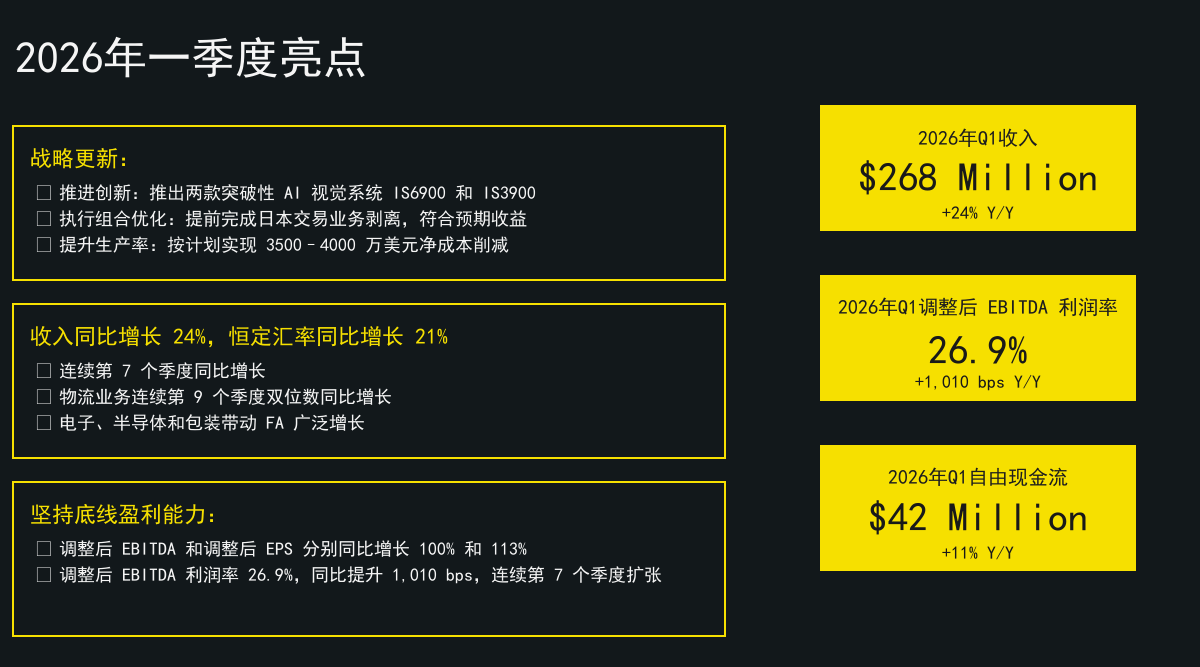
最让我注意到的是,调整后 EPS 翻倍以上,调整后毛利率达到 71.8%。这是一家高质量感知公司的特征。
它们推出了两款嵌入式 AI 视觉系统。
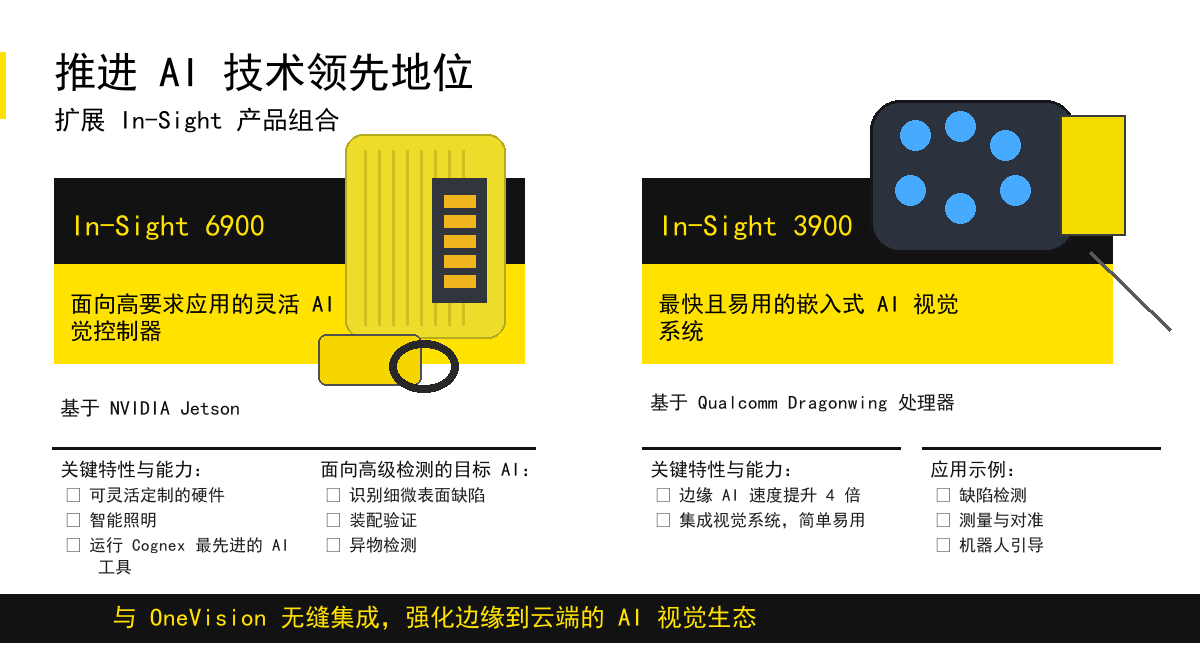
In-Sight 6900 由 NVDA 提供支持,面向那些需要强大 AI 视觉工具,但不想承担集成成本和基于 PC 设置负担的客户。
3900 由 Qualcomm 提供支持,被设计成一款用于高速 AI 检测的集成式智能摄像头。
这两款产品都接入 OneVision 和 In-Sight Vision Suite 软件平台。
Cognex 正在尝试构建更多边缘到云端的 AI 视觉生态,而不是销售彼此孤立的一次性视觉产品。OneVision 给客户提供了一种跨 Cognex 产品开发、部署和扩展 AI 视觉工作流的方式。客户不希望每个检测项目都像一个独立工程项目。他们想要可复用工具、更容易部署,以及更一致的软件体验。
这也是 AI 对 Cognex 变得非常重要的地方。传统机器视觉可以很强大,但往往需要大量专业知识。客户必须做很多事情,比如配置规则、调试系统、管理照明,并维护复杂工作流。AI 可以让更多流程变成“通过样例训练”。也就是说,客户可以向系统展示什么是好产品、什么是坏产品,以及系统需要识别什么。
管理层还表示,AI 正在帮助 Cognex 解决过去过于复杂的检测问题,同时降低客户前期工程负担和后续维护复杂度。
这是一个重要结论:AI 正在让机器视觉更容易部署。
物流业务在这里尤其重要。
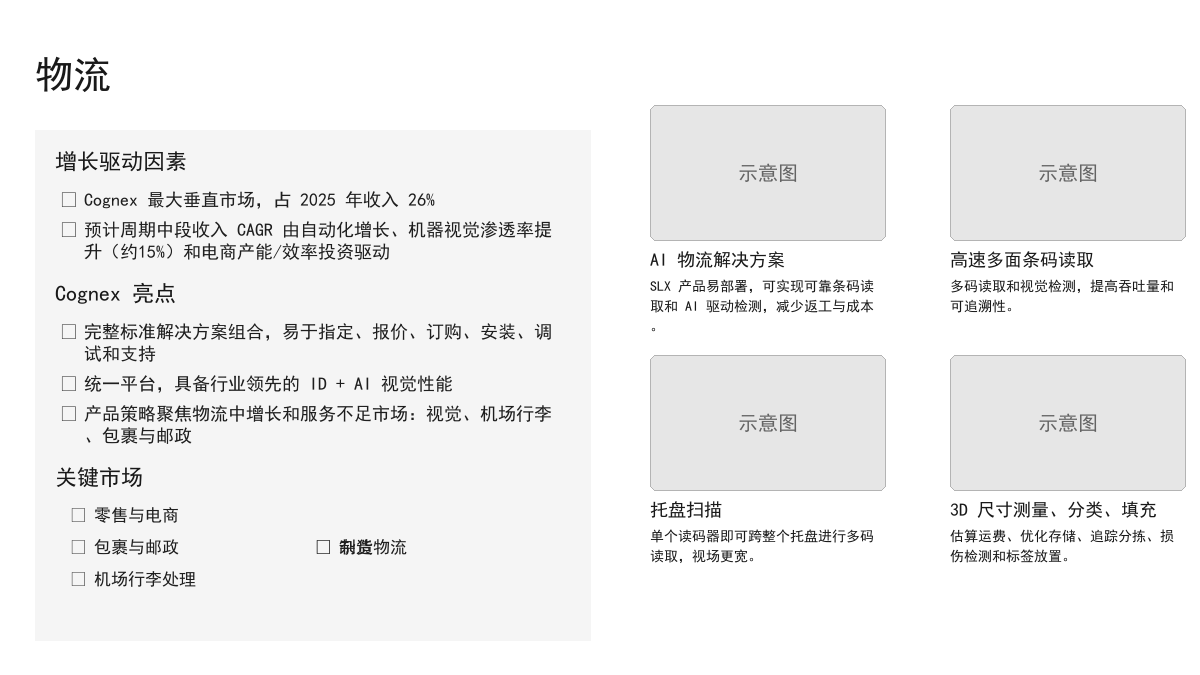
Cognex 已经连续 9 个季度实现物流业务双位数增长。历史上,这块业务与条码读取高度绑定。它现在仍然是业务的重要组成部分。但它们正在通过 SLX 组合,在其上叠加更多视觉能力。
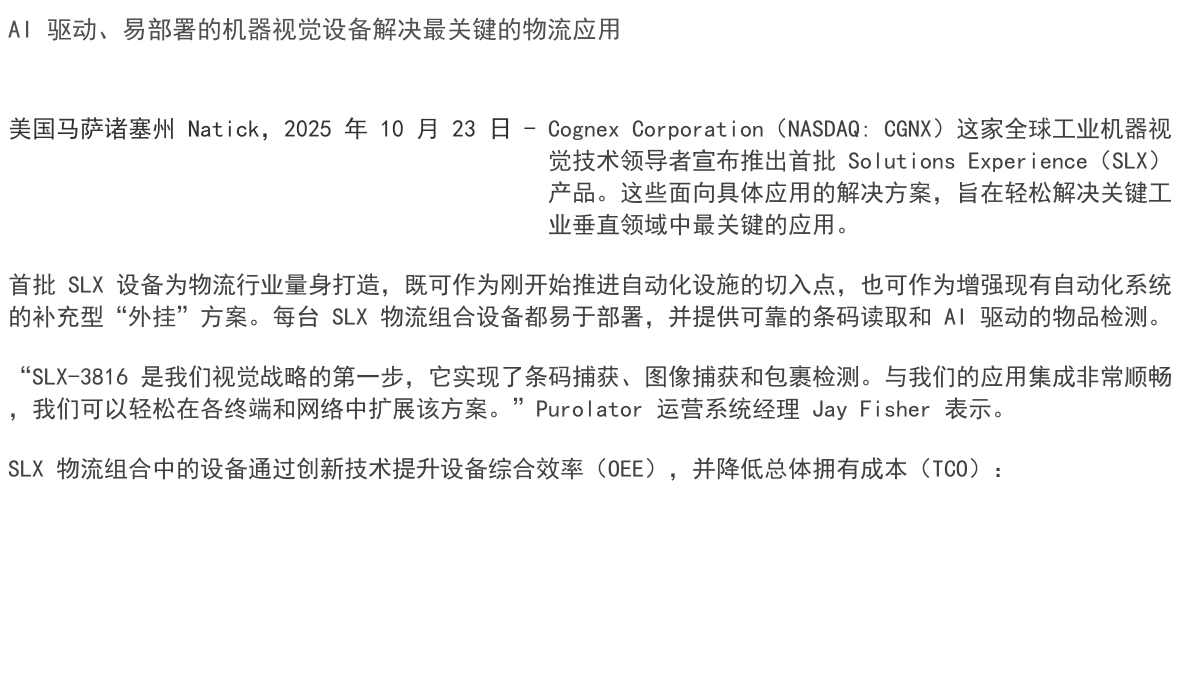
条码读取器回答一个问题:这是什么物品?
但更广泛的视觉系统可以开始回答更多问题。
包裹损坏了吗?标签可读吗?物体摆放位置正确吗?物品是否经过系统中的正确区域?等等。
这是完全不同层级的价值。它把物流转化为仓库感知。
最终目标是减少错误、提高吞吐量、降低劳动强度,并让物理系统更智能。
客户正在看到强劲 ROI,而视觉系统可以比纯条码系统拥有更好的定价。因此,机会不只是更多设备数量,也可能是每个应用场景更高的价值。
它们还在包装、电子、半导体和汽车领域有更广泛暴露。这些领域都实现了双位数增长。
所以 Cognex 不只是一家单一用例的 Physical AI 公司。它和更广泛的自动化周期绑定在一起。
当然,我也觉得半导体角度很有意思。
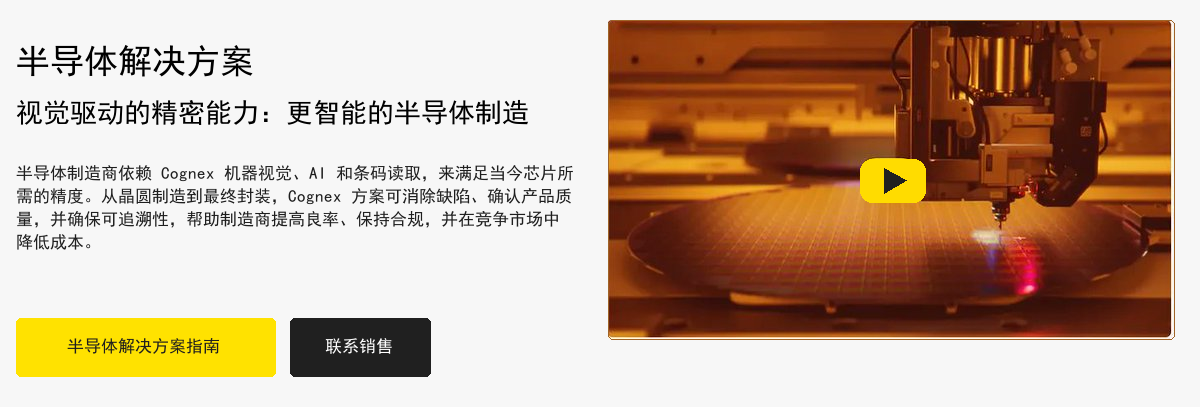
它们向半导体设备制造商销售视觉工具、光学、照明和完整系统。半导体制造正在变得更复杂,检测要求正在提高。这让机器视觉变得越来越重要。因此,它们在更广泛的 AI 基础设施建设中扮演一个角色。
总结来说,Cognex 给了我一种非常高质量的纯感知暴露。它直接契合这一层,拥有强劲利润率、自由现金流、回购、更好的 AI 产品周期,并且真实证明客户今天已经愿意为机器视觉付费。
Ouster $OUST#
过去一度被视为一家背负可怕汽车周期的 Lidar 公司,现在已经成为 Physical AI 超级周期的巨大受益者。
Lidar 传感器、原生彩色 3D 感知、立体摄像头、神经深度、AI 计算、智能基础设施软件和感知模型。哇。
Ouster 正在试图销售帮助机器理解物理空间的那一层。
最近一个季度是这种转型的很好证据。
要阅读这份报告的其余部分,请点击这里!
原文(en)#
Physical AI - Perception Required#
This is the moment I have been very excited about researching.
And the layer that has been most anticipated.
Layer 3…Perception.
We are making great progress on the Physical AI theme.
If you haven’t read the first two layers, read them here:
Physical AI : Layer 1
Physical AI : Layer 2
I have also taken several positions already. You can see them here:
Physical AI Portfolio
But today, I get to introduce Layer 3: Perception.
The reason I said this is the moment everyone has been waiting for is because this is the most discussed layer on X. Whether people know about it or not.
Companies like Ambarella $AMBA
or Ouster $OUST
Self driving. Lidar. Chips. Sensing. etc.
This is where the Physical AI story really starts to make sense to people. Layers 1 and 2 can feel a bit more abstract and less direct.
Layer 3 is very direct.
I also think this is one of the most investible layers, and the positions taken in this layer will have much higher weightings than the previous.
When we are talking about perception, we are talking about the deployed systems needing to understand the environment that they find themsevles in.
What’s in front of it? How far away is that object? Is the machine moving? Is it safe? and so on.
If the deployed system (whether it be a car or robot or drone or whatever) cannot understand it’s physical environment, it is just a piece of hardware. It lacks the INTELLIGENCE part.
So, they need perception.
And what’s nice is that this is already widely used.
Factories already spend money on machine vision. Warehouses already use cameras, scanners, and inspection systems. Cars already ship with ADAS (Advanced Driver Assistance Systems) chips and perception software.
We know that this is already a thing and that it is important.
So my goal of this report is to figure out which type of perception exposure is worth owning and introducing which companies I believe are best positioned.
What Perception Does#
Perception is the layer that turns the physical world into machine-usable information. That sounds fairly straightforward maybe, but it is one of the hardest parts of Physical AI because the real world is messy, inconsistent, and constantly changing.
We’ve got:
- Lighting constantly changing.
- Objects are always moving.
- Surfaces reflecting light and sun.
- Packages get damaged by contact, moisture, product.
- Roads get covered in rain, snow, dust, and glare.
- Factory parts arrive at strange angles.
- And so on.
A physical AI system has to make sense of all of that before it can do anything useful.
That is the key distinction in this layer. The system has to do more than just capture data. It has to turn raw signals into understanding.
A camera can give the system visual information and Lidar can give it depth and structure, and radar can help with motion, distance, and poor visibility. Edge chips can process that information locally. Software can turn the input into something the machine can actually use.
The value is more than the inputs. It is in what the system can infer from it.
- What is this object?
- Where is it?
- How far away is it? Is it moving?
- Is it damaged? Is it safe?
- Is it where it is supposed to be?
- Has something changed?
- Does the system need to act?
This is all perception.
This is also why the best opportunities in this layer are usually not the companies selling the cheapest standalone sensor. Over time, I think more value should accrue to companies that make perception easier to deploy, more accurate, more integrated, and more useful to the customer. That can show up in different ways.
It can be vision chips that process camera data locally. Or machine vision systems that help factories inspect products. It can be barcode reading that expands into broader warehouse vision. It can be lidar that adds richer 3D understanding. It can be software that turns raw sensor data into decisions, alerts, analytics, or automation.
That is the lens I am using in this report.
I am looking for companies that capture more of the perception problem. The best setups should have some combination of real deployments, software attachment, edge processing, customer workflow integration, and evidence that AI is making the product better.
This Layer is a bit different#
Layers 1 and 2 were a bit…abstract? I don’t know if that’s the right way to say it. But for many of the companies you really need to dig and try to find the Physical AI angle and it’s mostly a future optionality for many of those companies.
But here it is extremely direct.
All the things I said before like machine vision, automative ADAS, edge ai vision chips etc. are already shipping. iLidar and 3D sensing are already deployed.
This is a very investible layer TODAY, with direct exposure to Physical AI.
The Companies I Am Focused On#
There are many companies that play into this layer.
And as with all these layers, many companies can fit in several layers at the same time. So I am just trying to find the best placement for each company based on how I think about them.
So for Layer 3 that brings me to Ambarella, Cognex, and Ouster.
Ambaralla $AMBA I already have in my portfolio, as I invested prior to thinking about covering the Physical AI thematic. It gives the edge AI vision compute anchor that sits directly behind cameras and sensors. AMBA could easily go in Layer 4 as well.
Cognex $CGNX is a mature machine vision business where factories and warehouses already pay for perception.
Ouster $OUST gives really pure sensing and 3D perception exposure, with lidar, cameras, software, and smart infra.
Ceva $CEVA is going to go in Layer 4, but it did also screen here.
Let my introduce each of these companies a bit more.
This report is for educational and informational purposes only. It reflects my personal research process, opinions, and interpretation of publicly available information. Nothing in this report should be considered individualized investment advice, financial advice, tax advice, legal advice, or a recommendation to buy, sell, hold, or short any security.
Ambarella#
Like I said, this is already a 6% position in the Physical AI port. I may decide to increase it over time.
I already wrote up a full report here:
I Took A New Position - EDGE AI
And an earnings debrief:
AMBA Earnings: The Edge AI Thesis Got More Real
So I won’t do a big dive here and ill just do a TLDR.
They sell low-power vision AI SoCs that sit inside cameras, drones, vehicles, robots, security systems, and industrial devices. Those chips process visual data locally, run AI inference, and help the device send useful outputs instead of raw video.
That makes AMBA a bridge between perception and edge compute.
The sensor captures the world and Ambarella helps the system process what the sensor captures.
That distinction is important because Physical AI cannot depend on sending every decision to the cloud. A drone, vehicle, warehouse robot, factory camera, or security system needs fast local intelligence. Latency, bandwidth, power, privacy, and reliability all push more inference toward the edge.
The latest earnings call back up the Physical AI connection.
Management said AI inference is moving toward the edge and toward the physical AI layers of the network. They also said Ambarella’s SoCs integrate perception, sensor fusion, AI acceleration, CPUs, video encoding, and other system functions into one chip.
Ambarella now has more than 15 robotics design wins, including aerial drones, with lifetime revenue exceeding $100 million. They also have more than 30 customers in its robotics pipeline. Management specifically discussed aerial drones, industrial automation, autonomous mobile robots, delivery robots, warehouse robots, and some humanoid-type applications.
That is the type of evidence I really wanted to see. Robotics is beginning to show up in the design-win funnel in a meaningful way.
The Hanwha agreement also materially strengthens the setup. Ambarella announced a long-term agreement with potential revenue of more than $800 million over more than 10 years. The relationship starts with physical security, but management framed the broader opportunity around operational automation, life sciences, robotics, and industrial markets.
That kind of long-term agreement can make the business more predictable over time if it ramps as expected.
Cognex#
Cognex helps factories and warehouses inspect products, read codes, measure objects, guide automation systems, and improve physical workflows. The use cases are practical, measurable, and already commercial.
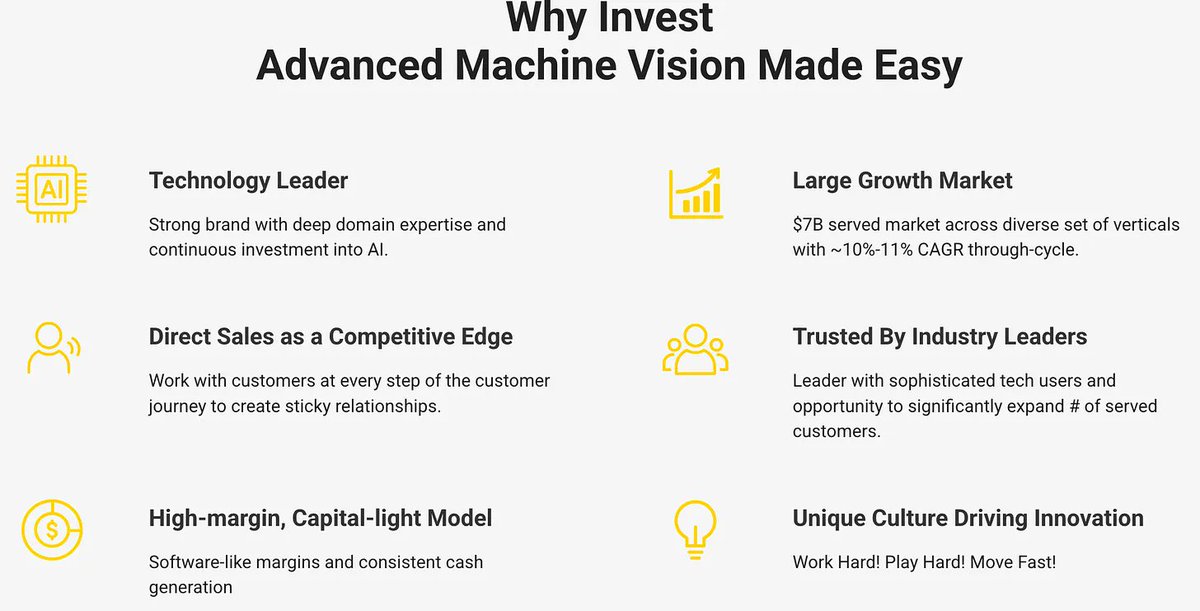
They sell vision systems, smart cameras, barcode readers, 3D vision systems, deep learning tools, and industrial inspection software. Its customers are buying better quality control, higher throughput, fewer errors, and more automation
The latest quarter was excellent.
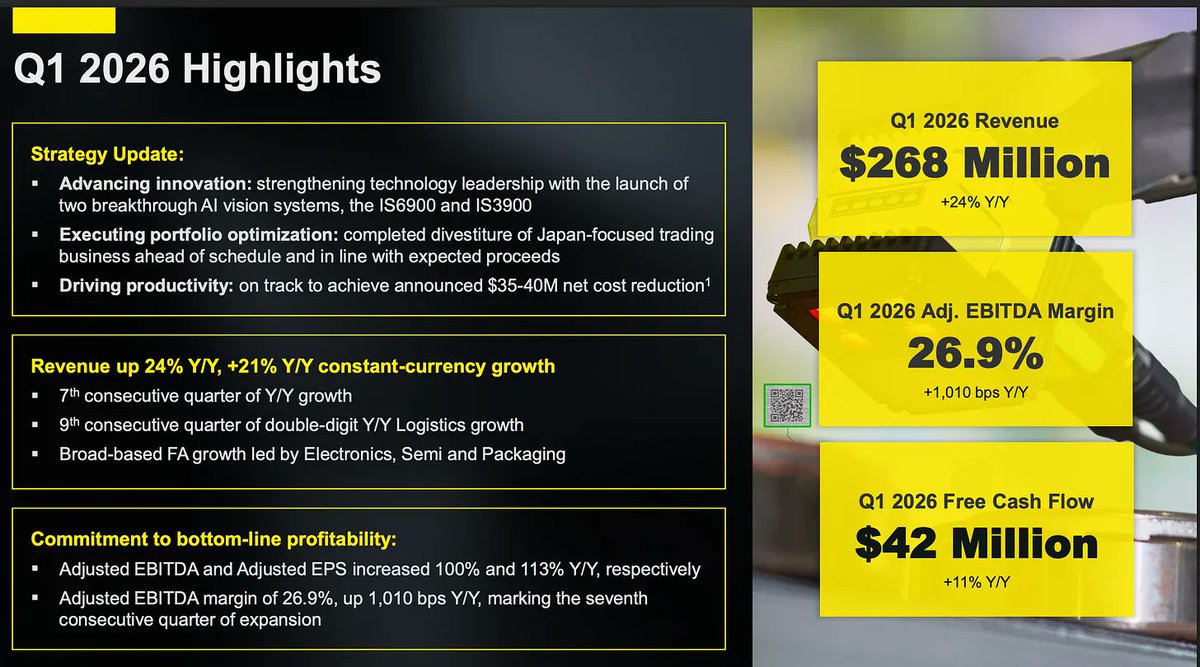
The biggest things that stand out to me are that the Adjusted EPS more than doubled and adjusted gross margins reached 71.8%. This is the profile of a high-quality perception business.
They launched two embedded AI vision systems.
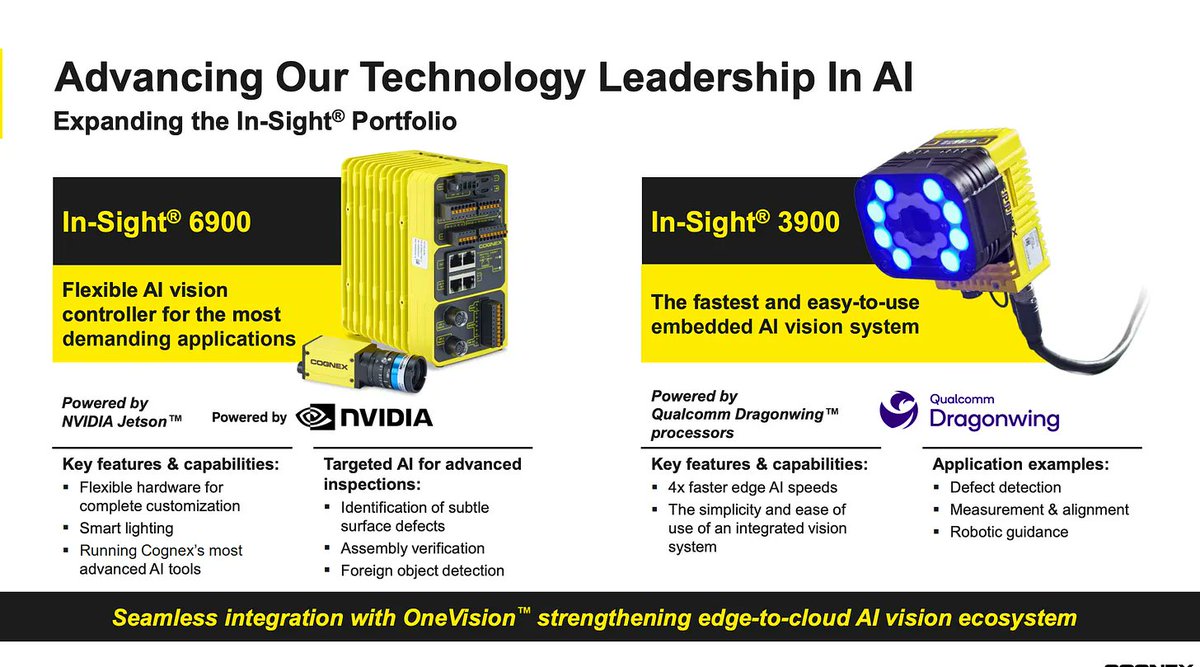
The In-Sight 6900 is powered by NVDA and is built for customers that need powerful AI vision tools without the cost of integration and burden of a PC-based setup.
The 3900 is powered by Qualcomm and is built as an integrated smart camera for high-speed AI inspection.
Both products connect into OneVision and the In-Sight Vision Suite software platform.
Cognex is trying to build more of an edge-to-cloud AI vision ecosystem rather than selling one-off vision products that live in isolation. OneVision gives customers a way to develop, deploy, and scale AI vision workflows across Cognex products. Customers do not want every inspection project to feel like a separate engineering project. They want reusable tools, easier deployment, and a more consistent software experience.
This is all where AI becomes really important for Cognex. Traditional machine vision could be powerful but it would often require significant expertise. Customer would have to do things like configure rules, tune systems, manage lighting, and maintain complciated work flows. AI can make more of that process ‘train-by-example’. Meaning a customer can show the system what a good product looks like, what a bad product looks like, and what the system needs to recognize.
Management also said that AI is helping Cognex solve inspection problems that were previously too complex while also reducing the upfront engineering burden and downstream maintenance complexity for customers.
This is a major takeaway: AI is making machine vision easier to deploy.
The logistics business is especially important here.
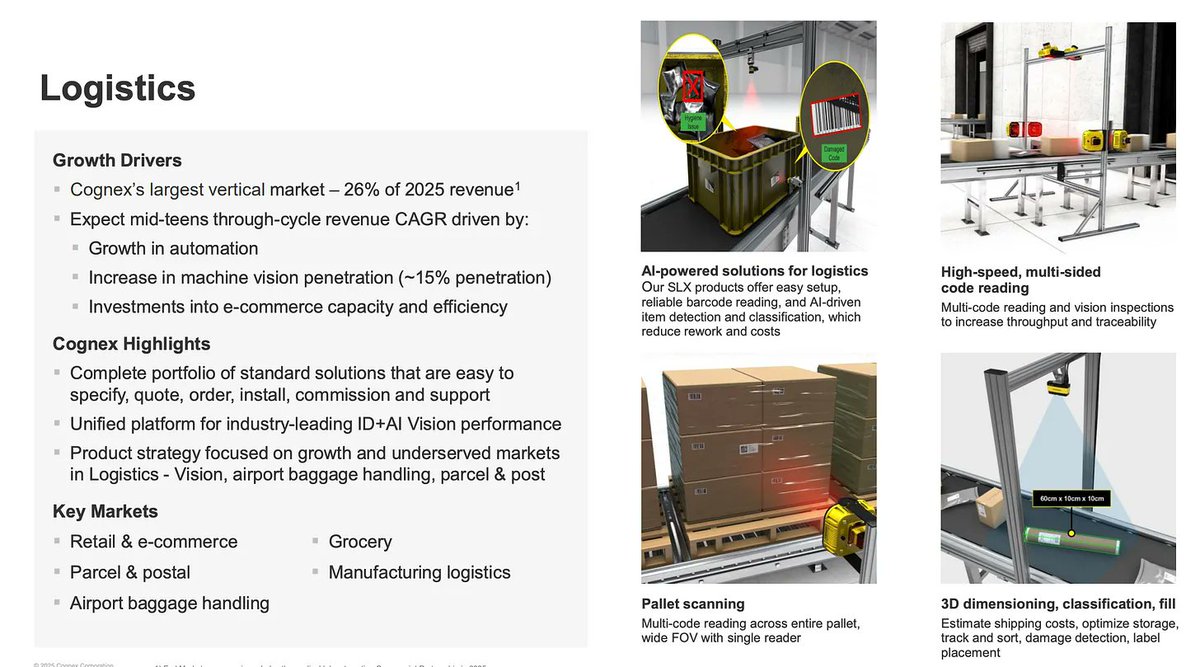
Cognex has now delivered nine consecutive quarters of double-digit logistics growth. Historically this business was heavily tied to barcode reading. And it still is a major part of the business. But they are now layering more vision capability on top through their SLX portfolio.
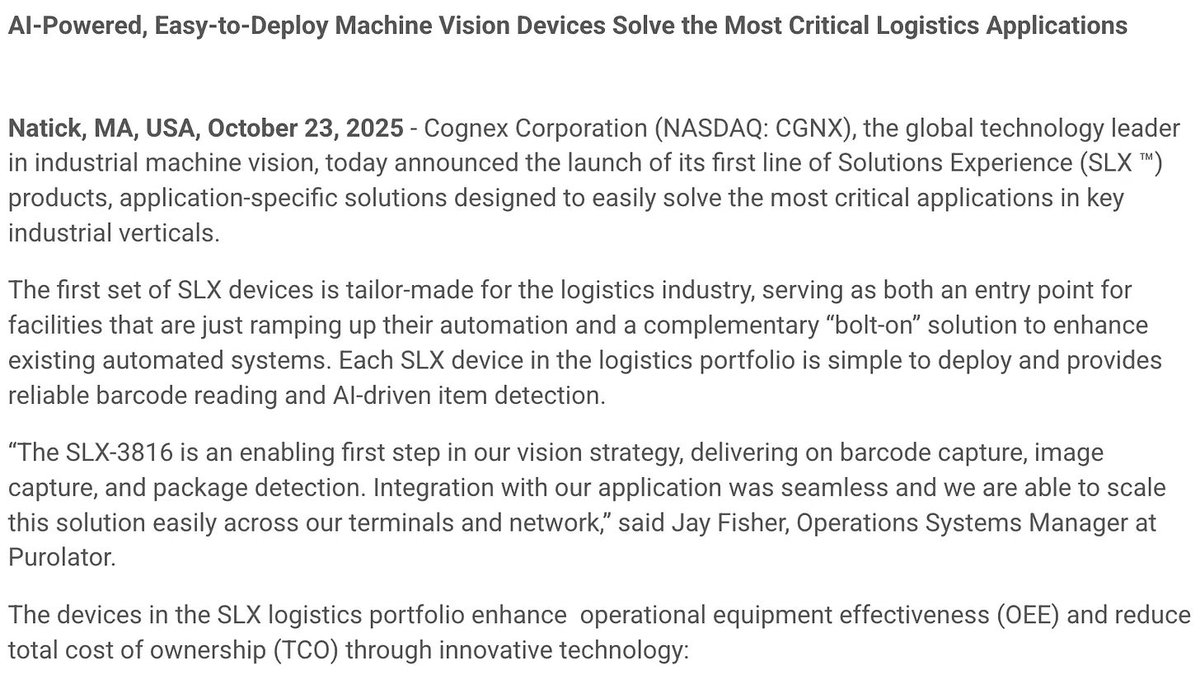
A barcode reader answers one question: what is this item?
But a broader vision system can start answering more questions.
Is the package damaged? Is the label readable? Is the object positioned correctly? Is the item moving through the correct part of the system? etc.
This is a whole different level of value. This turns logistics into warehouse perception.
The end goal is to reduce errors, increase throughput, lower labor intensity, and make the physical system more intelligent.
Customers are seeing strong ROI, and vision systems can carry better pricing than barcode-only systems. So not only is the opportunity more units, it can also be higher value per application.
They also have broader exposure across packaging, electronics, semiconductors, and automotive. They all grew double digits.
So Cognex is more than a one-use-case Physical Ai company. It’s tied to the broader automation cycle.
I thought the semiconductor angle was interesting too of course.
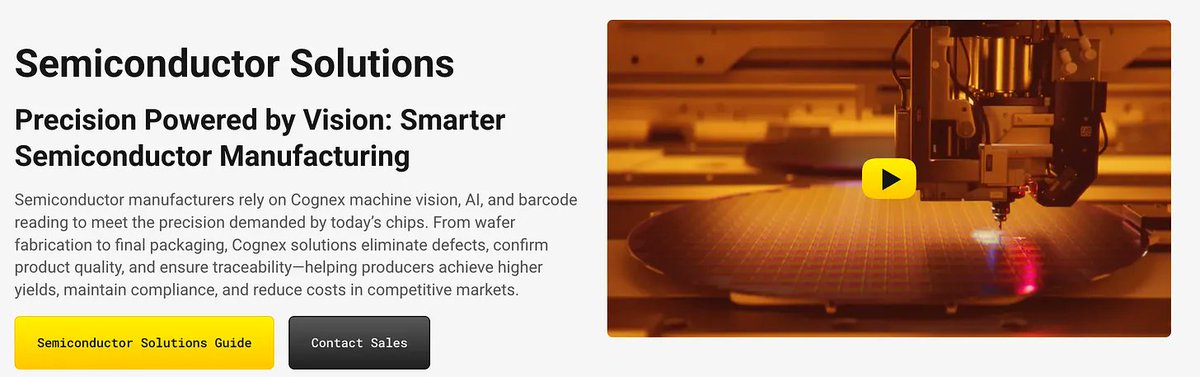
They sell into semiconductor equipment manufacturers across vision tools, optics, lighting, and completed systems. This manufacturing is becoming more complex and inspection requirements are increasing. This leads to machine vision becoming increasingly important. So they pay a role in the broader AI infra buildout.
To summarize, Cognex gives me a really high quality pure-play exposure to perception. It has direct layer fit, strong margins, free cash flow, buybacks, a better AI product cycle, and real proof that customers already pay for machine vision today.
Ouster $OUST#
What was once once seen as a Lidar company with the dreaded automotive cycles has now emerged as a massive beneficiary of the Physical AI supercycle.
Lidar sensors, native color 3D sensing, stereo cameras, neural depth, AI compute, smart infrastructure software, and perception models. Wow.
Oust is trying to sell the layer that helps machines understand physical space.
The latest quarter was great evidence of the transformation.
To read the rest of this report, click here!
这里还没有任何文章可以列出。