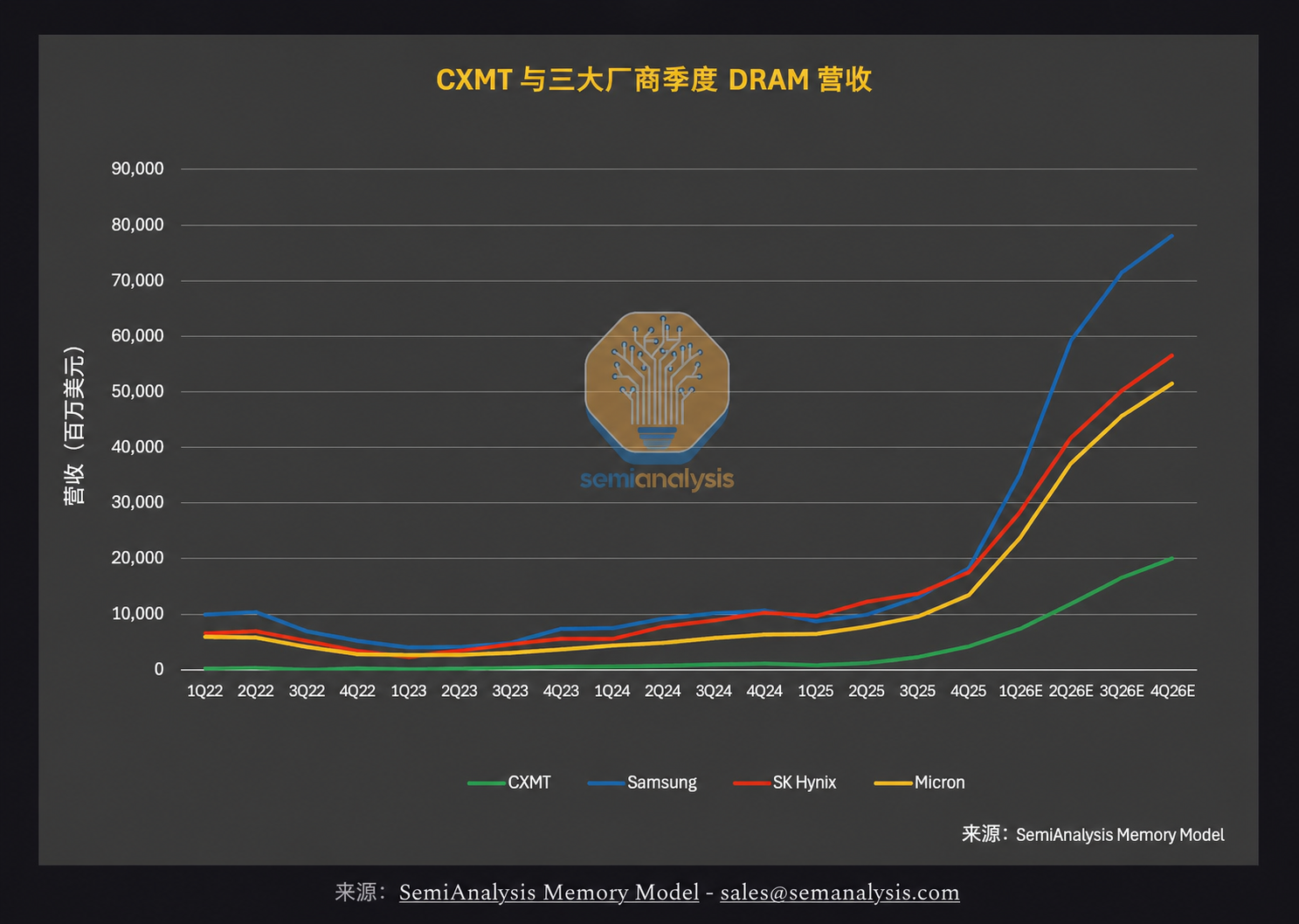
CXMT is now clearly the No. 4 DRAM player globally, and it aims to exert increasing pressure on leading memory suppliers such as SK Hynix, Samsung, and Micron. While the company has been expanding capacity, with further additions likely supported by significant cash flow accumulation in the coming months, CXMT still faces several key challenges.
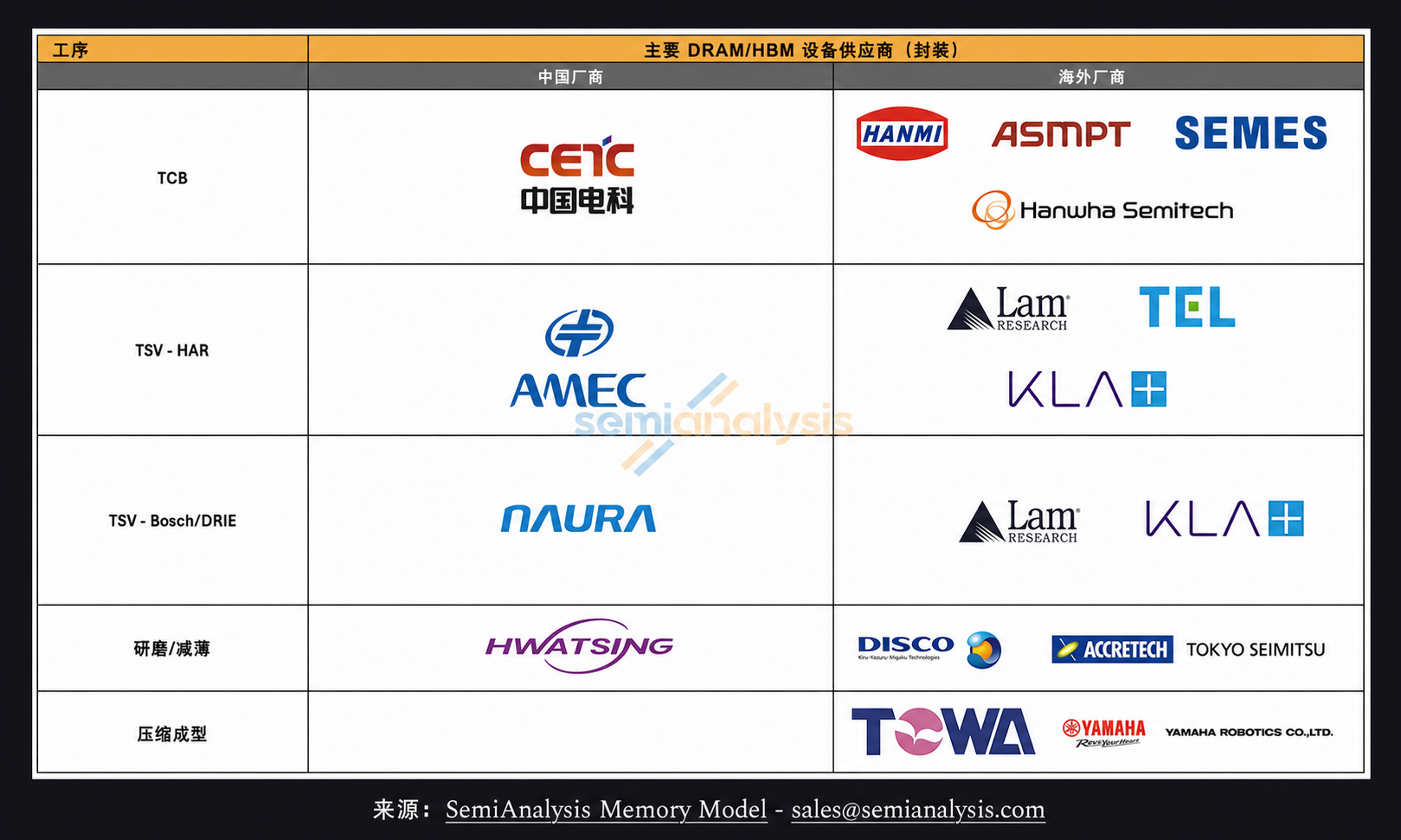
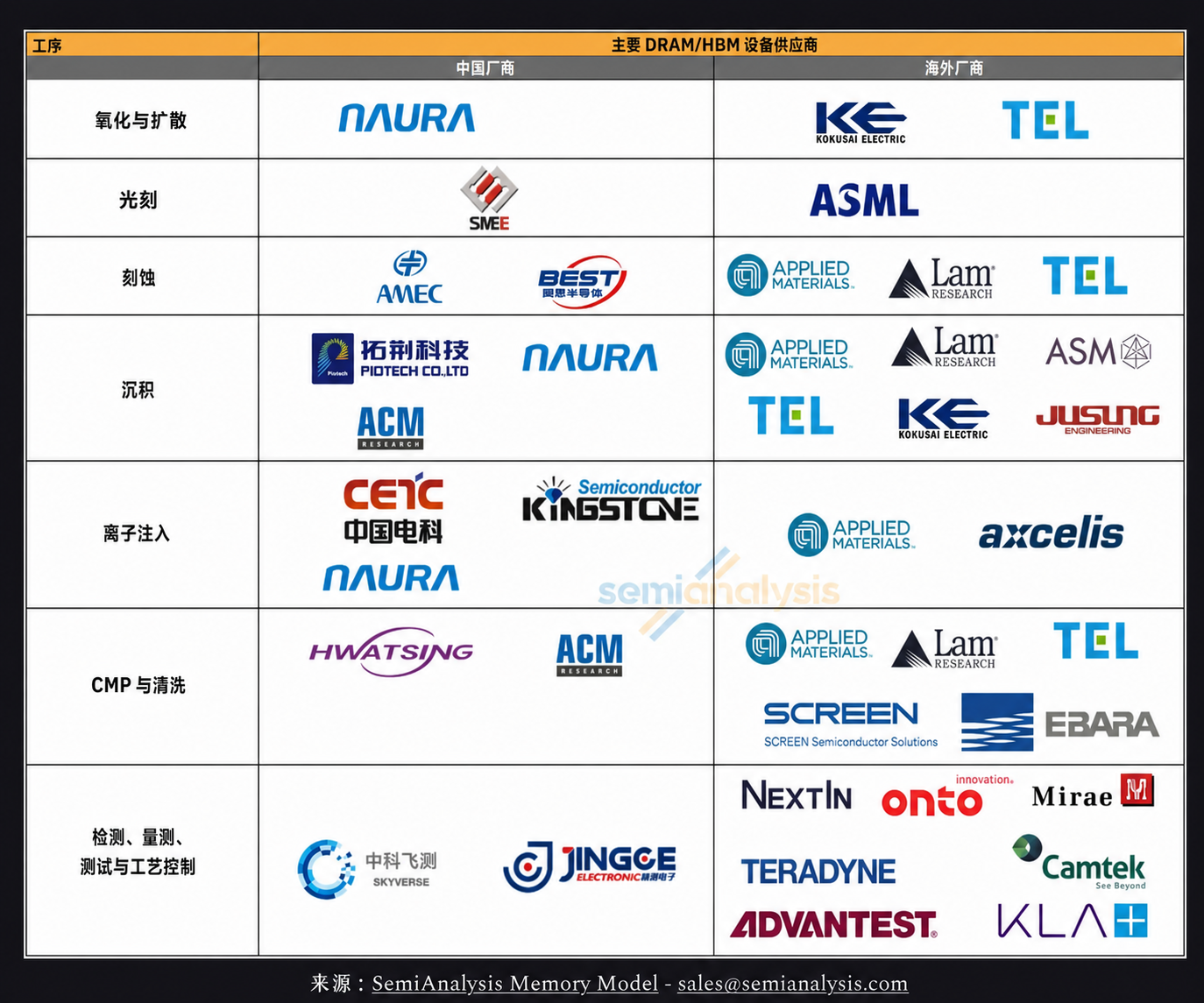
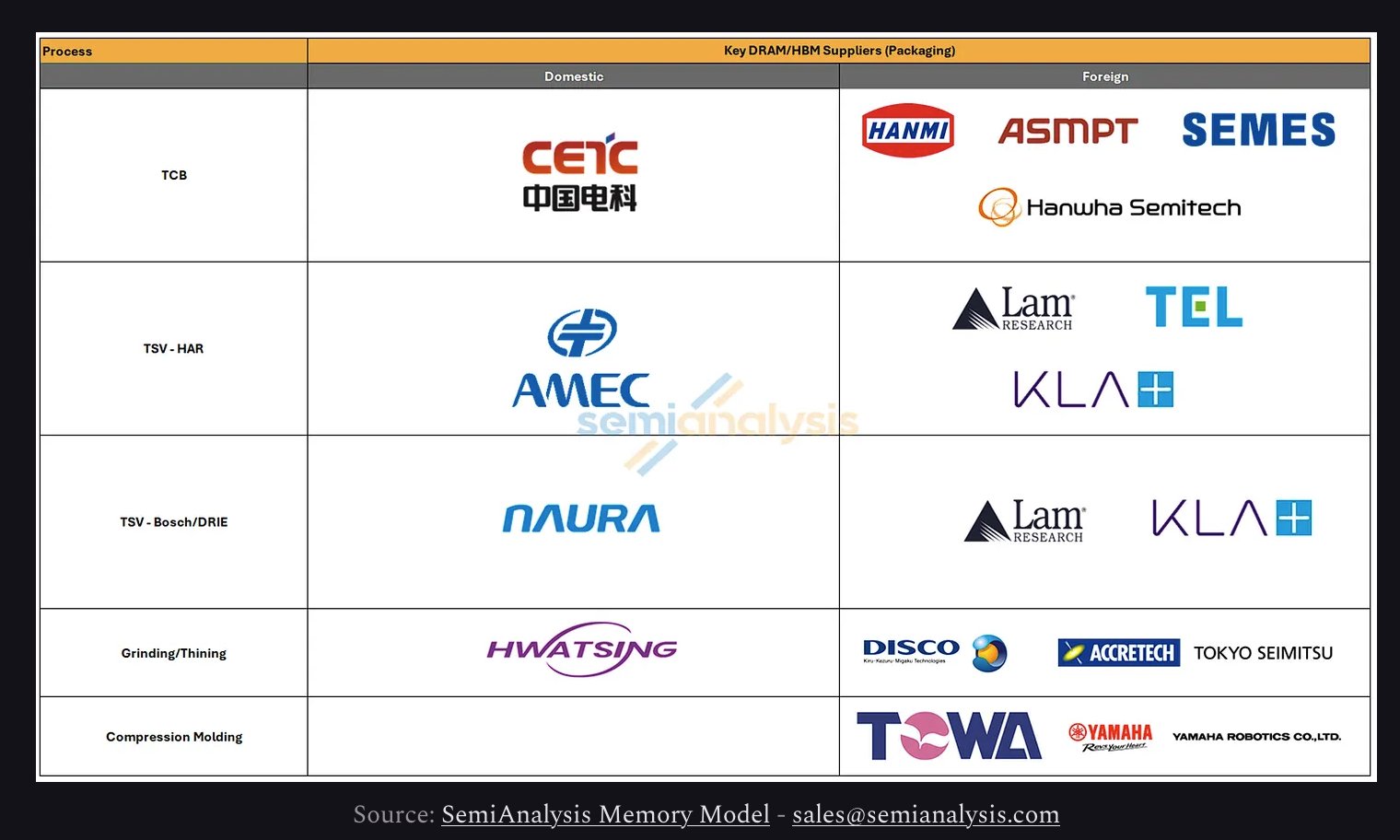
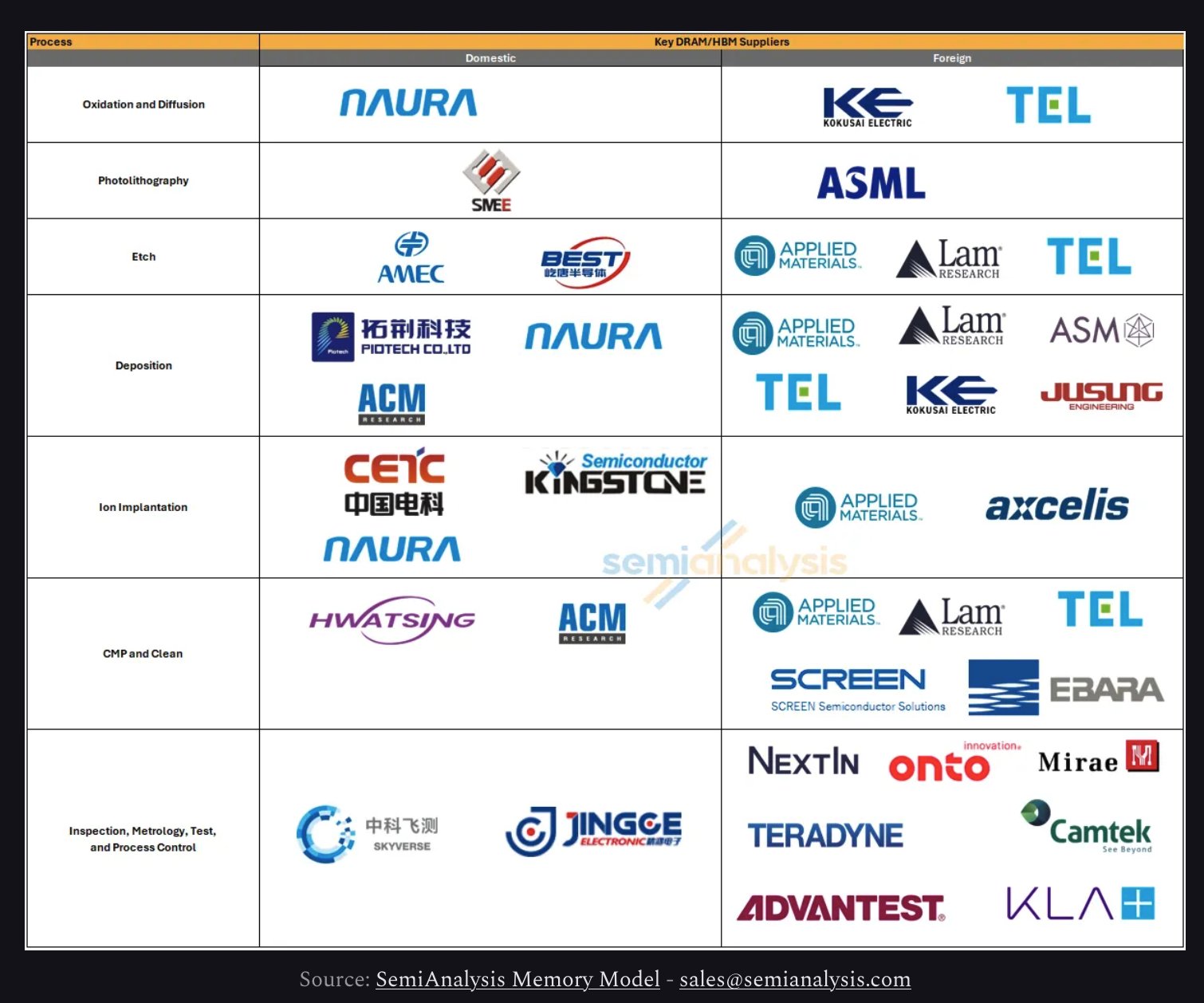
Equipment: The company continues to face export controls across a wide range of advanced semiconductor equipment required for both DRAM and HBM production, including EUV lithography, advanced etch tools, and TSV-related equipment. These restrictions remain a major constraint on CXMT’s ability to scale into more advanced process nodes and higher-end memory products. While the rise of domestic equipment suppliers such as AMEC, Naura, and others has certainly helped alleviate the impact of export controls, this relief is highly asymmetric.
CXMT still faces manufacturing challenges across multiple process steps, as each step requires different equipment capabilities, process maturity, and integration know-how. In other words, progress in one equipment category does not automatically solve bottlenecks in another, leaving the company exposed to uneven tool availability, process variability, and yield risk across the full DRAM and HBM manufacturing flow.
Figure 1: Domestic and foreign DRAM/HBM packaging equipment suppliers.
Figure 2: Equipment suppliers by oxidation and diffusion, photolithography, etch, deposition, ion implantation, cleaning, inspection, and other process steps.
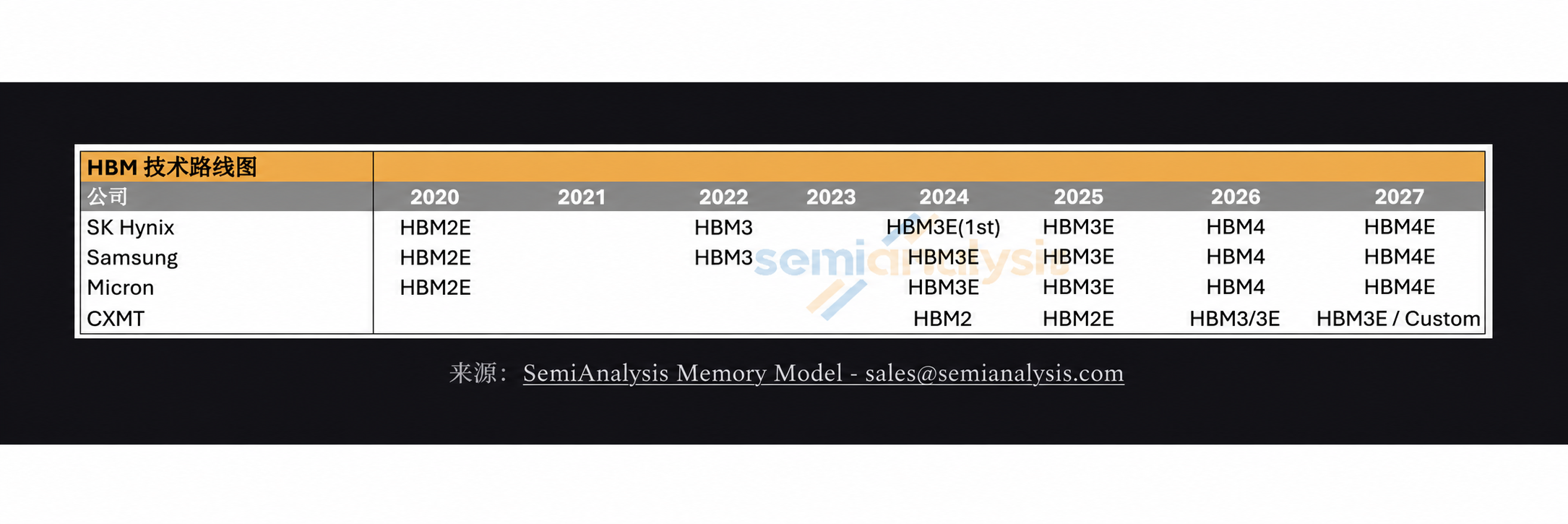
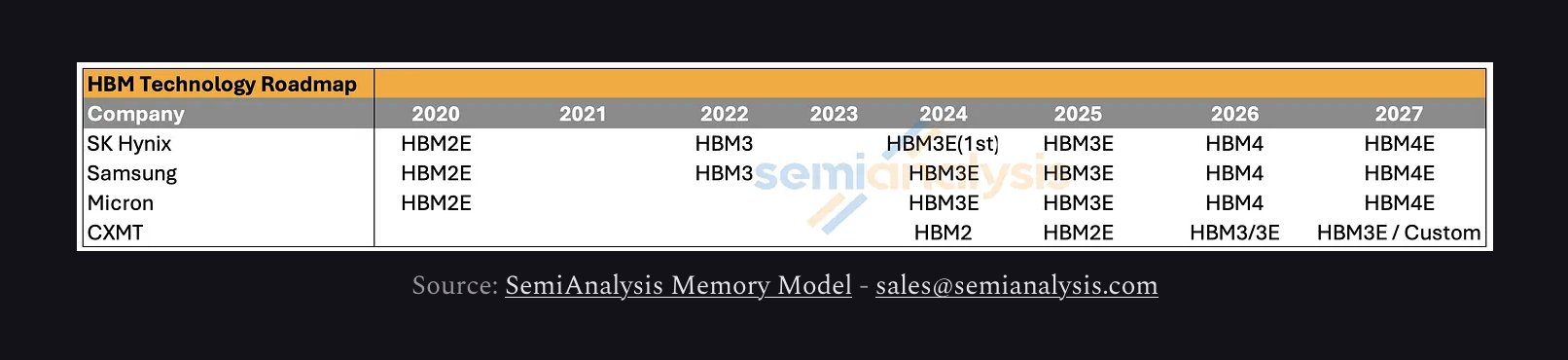
Technology: CXMT still trails the incumbents by several generations in DRAM process technology, even as its existing nodes continue to improve and the company pushes forward with further innovation. The gap in HBM is even larger.
This challenge is likely to become more difficult over time, as advanced equipment plays an increasingly critical role in enabling next-generation DRAM scaling.
Figure 3: HBM technology roadmaps for SK Hynix, Samsung, Micron, and CXMT.
Market: Most of CXMT’s presence remains concentrated in China. Even where the company has begun qualifying or penetrating foreign PC, mobile, and consumer brands, its global share remains very very limited. Over time, broader international adoption will depend not only on pricing and supply availability, but also on product quality, qualification progress, geopolitical considerations, and customer willingness to diversify away from incumbent suppliers.
Some investors may misread our recent research on CXMT as a purely negative signal for the memory market. We think that interpretation misses the central point of this cycle: significant shortage.
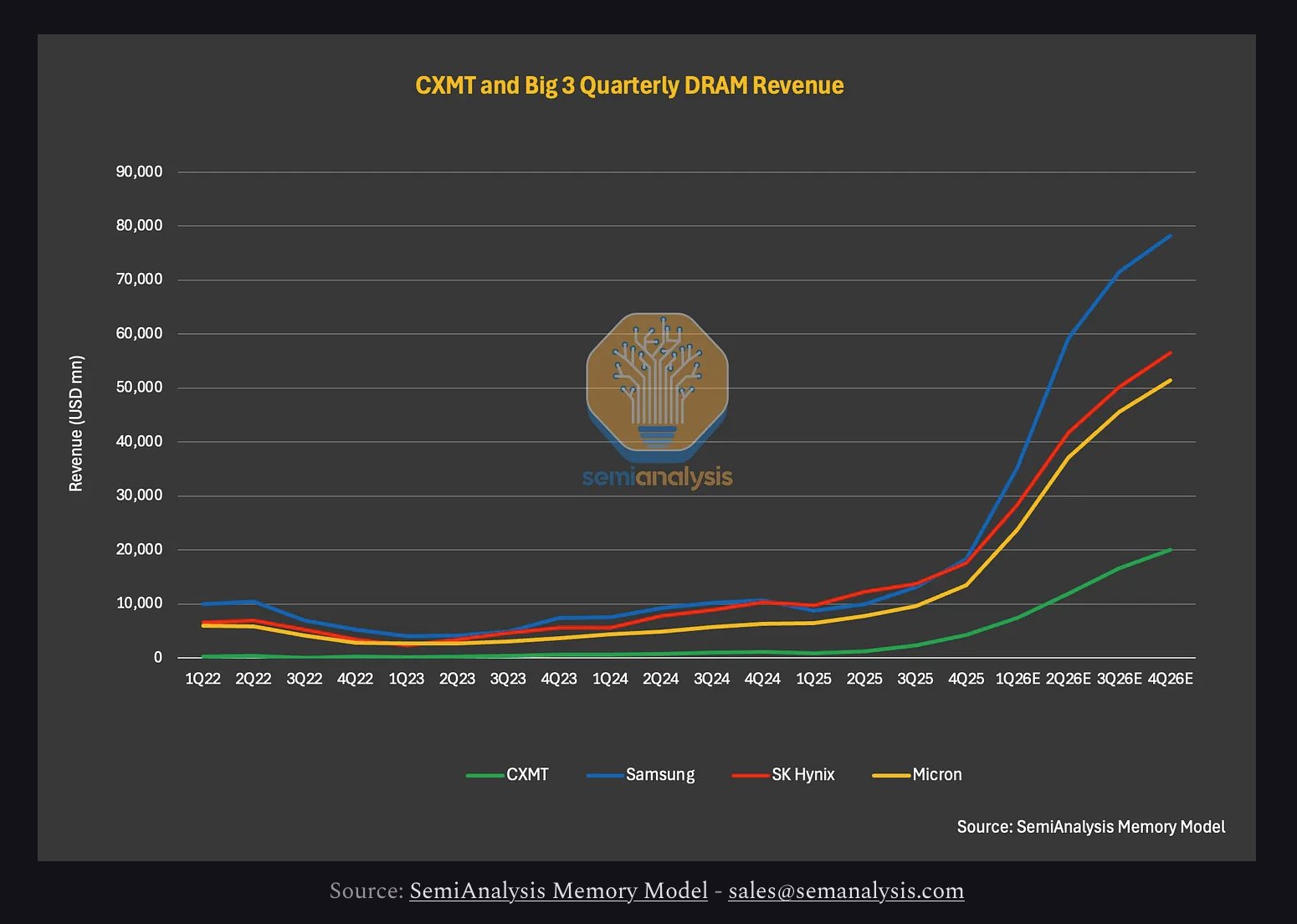
Even as CXMT continues to add wafers and bit supply over time, we believe the extremely constrained DRAM environment will remain supportive for all memory suppliers. In fact, CXMT itself may struggle to fully satisfy domestic Chinese demand, let alone “flood the market with cheap memory,” as some might fear.
It is also worth emphasizing that CXMT’s memory is not necessarily “cheap.” Chinese memory pricing has also gone through the roof, broadly tracking the strength seen across the global DRAM market. In other words, CXMT is benefiting from the same shortage-driven pricing environment as the incumbents, rather than acting as a deflationary force against it. This might be true before, but NOT this time.
To that end, CXMT’s rise should be viewed NOT cycle-killer nor imminent threat to leading memory players, but more as a long-term structural competitive force. In the near term, the scale of DRAM undersupply is simply too large for CXMT’s incremental output to materially loosen the market. The supercycle remains defined by constrained supply, rising memory content, HBM wafer absorption, and accelerating AI-driven demand.
Figure 4: Quarterly DRAM revenue for CXMT, Samsung, SK Hynix, and Micron.